Gallery “The House on the Hill”
Not every viewer is able to perceive art outside the walls of a gallery.Not every art piece placed outside a gallery is perceived as art.
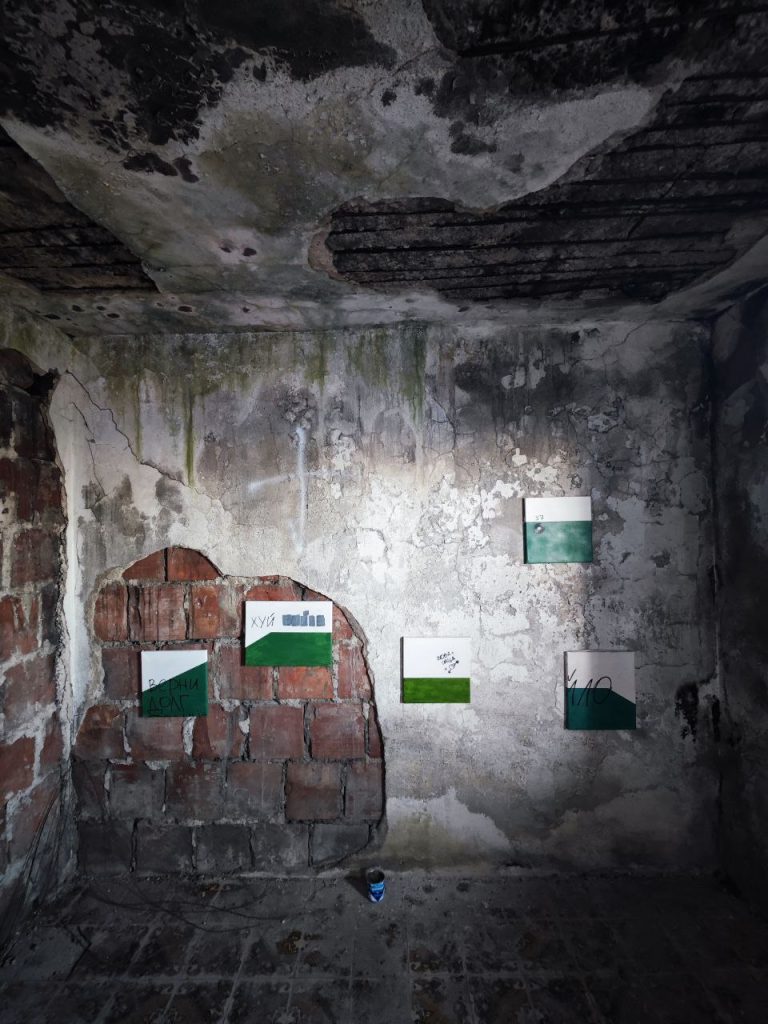
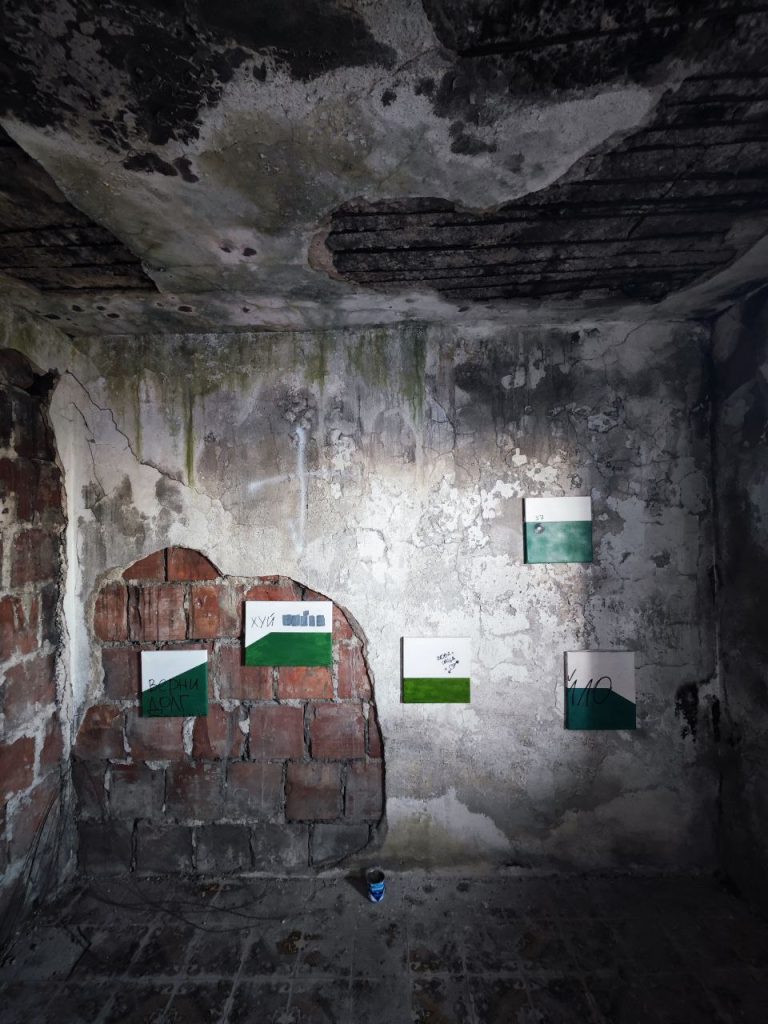
The exhibition in an abandoned house called “The House on the Hill” in Montenegro became an example of how abandoned space is used by artists as an exhibition space. The exhibition was organized by emigrant artists from Russia back in the summer of 2023. Visitors climbed to the spontaneously emerged gallery using the coordinates received from the organizers in advance. Yes, the path to the gallery was thorny – it consisted mainly of an uphill climb on clay and rocky soil, along a long narrow path overgrown with weeds and small thorny bushes.
At the entrance, viewers encountered the atmosphere of a space long abandoned by people. Inside the building there was dust, bird droppings lay in the corners on the floor, and a sharp smell of dampness and decay hit the nose. On the floor the organizers carefully cleared narrow paths so that viewers could approach the art objects and canvases on the walls. Rays of sunset light broke through the shards of glass and fell on an old sofa, which appeared either as part of the exposition or as a heavy object that had not been carried out to the trash.
Such a collision of art and “anti-space” provoked an inner conflict in the viewer. On one hand, viewed a contemporary art exhibition, he saw canvases on the walls. On the other hand, he was standing amid dirt and destruction, trying not to pay attention to a strong inner feeling of disgust and the desire to leave. And here a conclusion suggests itself: not every viewer is able to perceive art outside the walls of a gallery. And not every art piece placed outside a gallery is perceived as art.
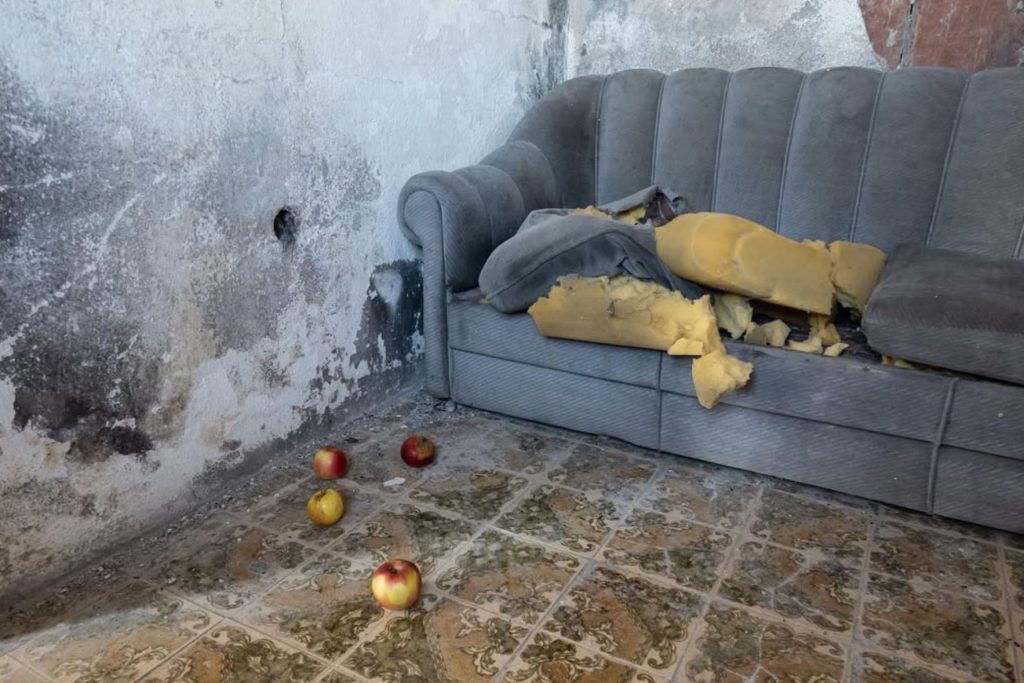
A new format of an exhibition
The format of a exhibition in an abandoned place became an intermediate state between street art and squatting.
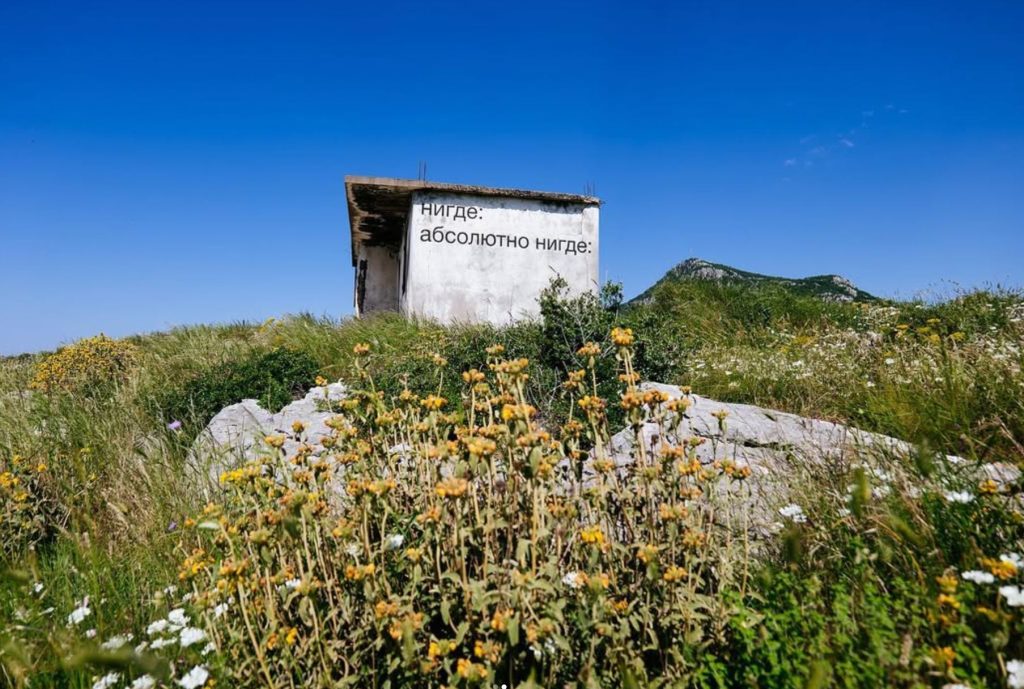
Many visitors reacted the same way: “this is very strange.” But the truly strange thing was another things, visitors did not feel rejection, no one left, no one voiced an angry comment. Everyone just simply quietly surprised. This exhibition project offered viewers the opportunity to step outside the usual sterile environment of gallery art. Viewers encountered art outside the traditional gallery format. A gallery always sets the context and imposes trust in what is exhibited. Сonversely, an abandoned space puts into question the very fact of the seen belonging to art. Any artwork here easily becomes part of accidental visual noise, blends with graffiti, remnants of past life, and traces of destruction.
The format of an exhibition in an abandoned place became an intermediate state between street art and squatting. Artists worked within a single theme: they created canvases, installations, performances, interacted with the space without trying to improve it. The abandoned house did not turn into a squat. On the first and only day of the exhibition, the artists organizing it created the atmosphere of a vernissage. Art, wine, snacks, and the artists themselves greeted the guests. After the vernissage the art pieces remained there in “The House on the Hill”. None of the artists took their artworks or tried to control their future fate.
The project proposed by street artist Slava PTRK developed in several abandoned locations in Montenegro. This format became a new tool for artistic demonstration that required from the viewer an unusual degree of involvement.
How artists in other countries use abandoned buildings
Combining the format of “bombing in abandoned places” with a gallery approach gave emigrant artists the opportunity to continue their exhibition practice bypassing local institutions.
In Europe and the USA artists often use abandoned places to talk about the history of locations, politics, ecological problems, and social context. One more example is the Bombay Beach Biennale. It takes place on the dried-up shore of a lake in California as a commentary on the ecological catastrophe of this lake. The “Metelkova mesto” project in Ljubljana grew out of the political processes of the independence of Slovenia and Croatia.
Russian-speaking emigrant artists come to formats outside galleries for other reasons. In emigration, as a rule, the artist’s access to local institutions is difficult. Local institutions are not familiar with emigrants. They do not speak the same language, and the themes the artists work with are often not interesting to local institutions. Explicitly, exhibitions in abandoned places become a working tool for the creative life of an artist in emigration.
The emigration of artists reformatted the ways of demonstrating art. Under conditions of limited budgets, the closed nature of the art environment, and many other limiting factors, this format of a gallery seems simple, clear, and accessible. For the viewer, such a format may become a new and unusual experience of interacting with art.