Visual essay by Galina Bakinova
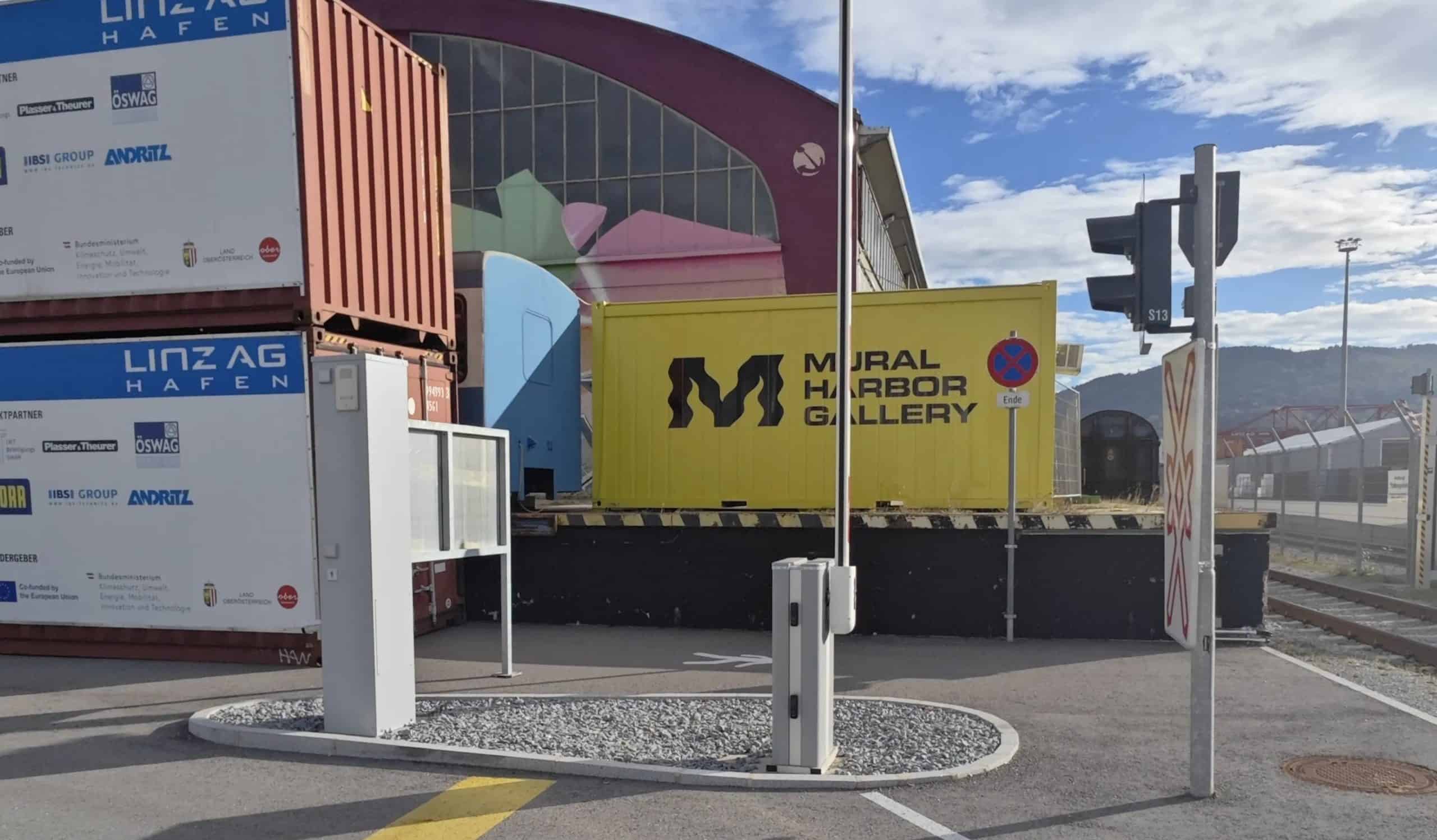
Mural Harbor Gallery is a gallery located in an industrial zone on the outskirts of Linz: concrete, rust textures, empty surfaces of hangar walls – seemingly an ideal environment for street art. Artists are selected by curators, works are sold, tours run on schedule. The space gives the impression of a well-functioning system.
And perhaps this is exactly where the problem lies.
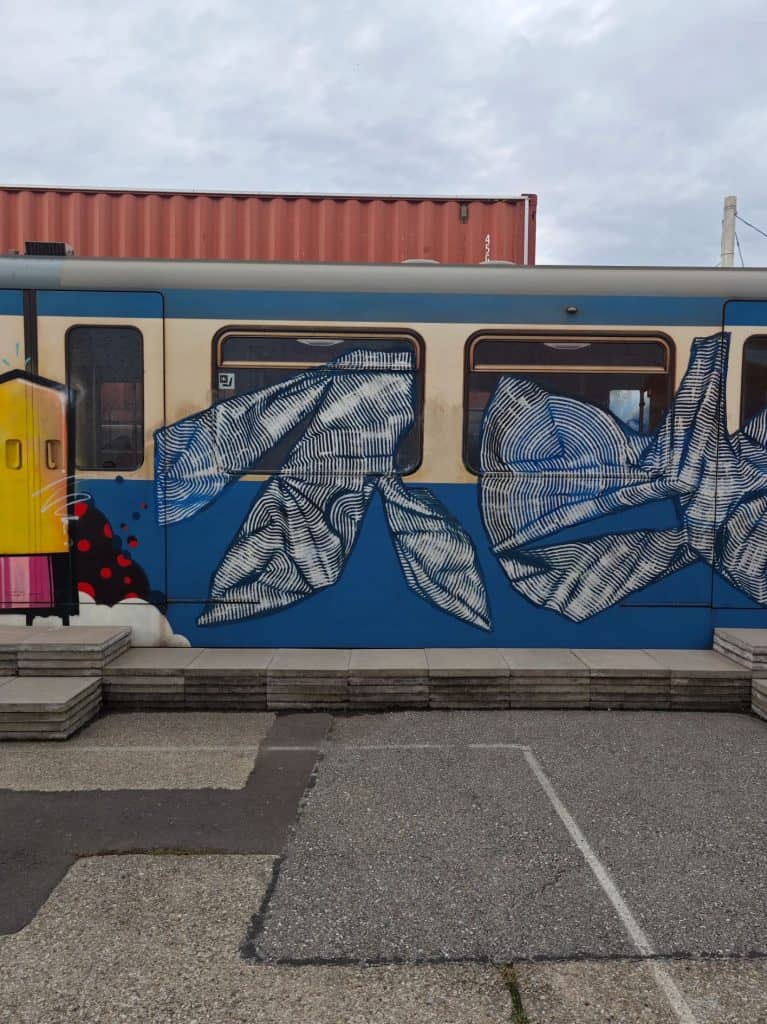
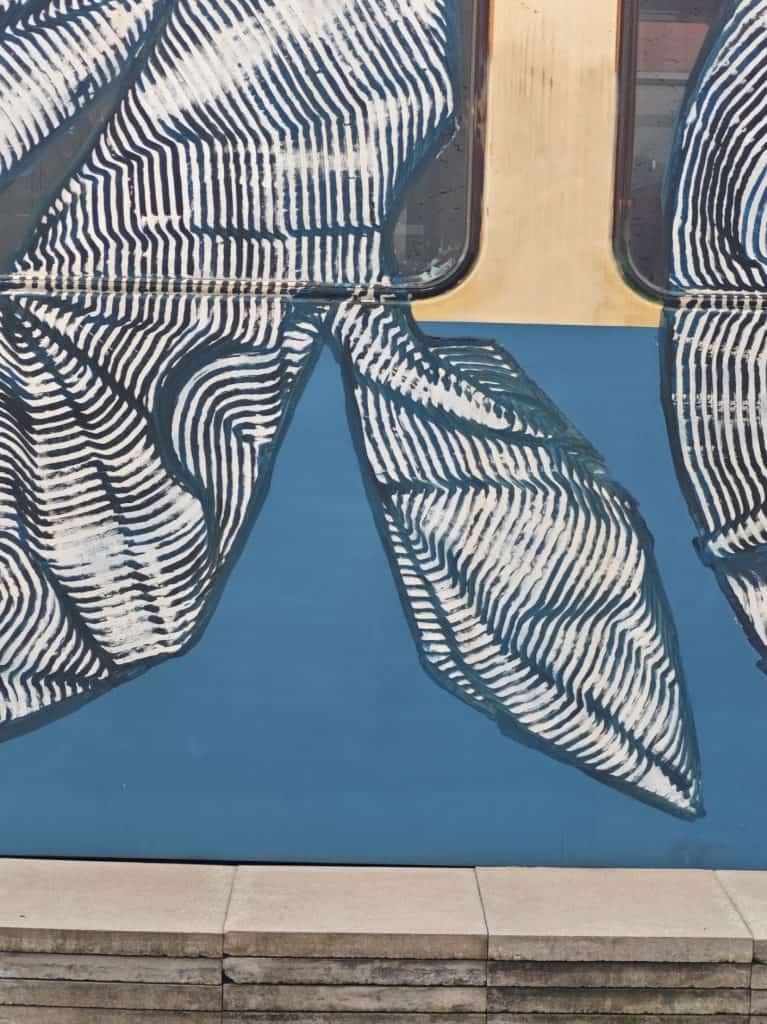
My walk through the gallery was planned, and at first everything went as expected. The first artwork in the gallery was artwork by Manuel Skirl. It looks like ornamental works: precise, rhythmic, visually flawless. It is easy to “read” and immediately create a sense of high-quality street art.
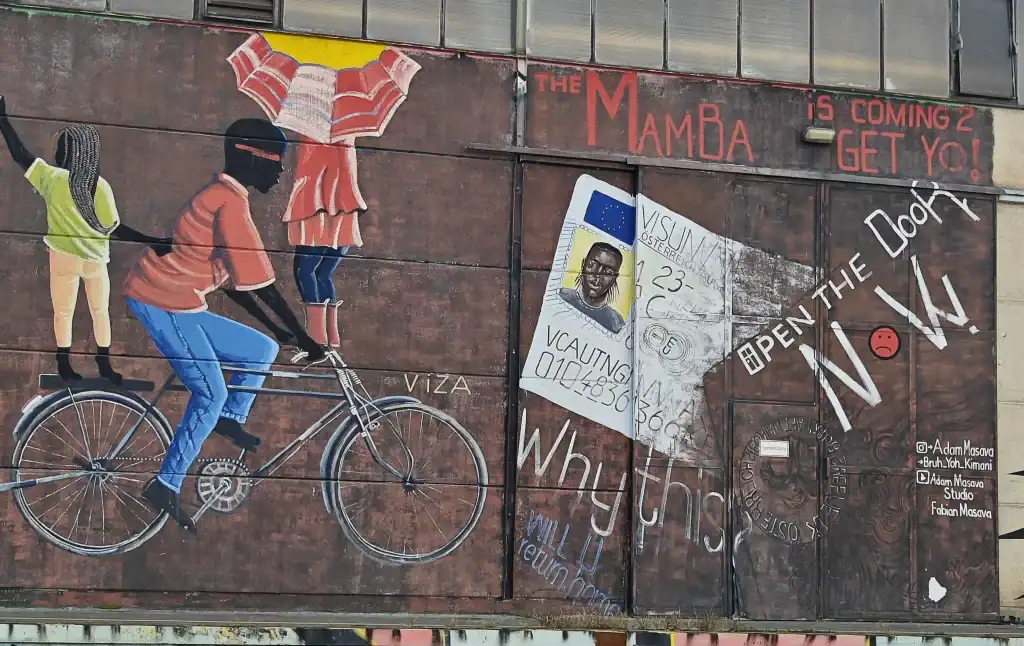
I note the work of Kenyan artist Adam Masawa. African figures on a bicycle against the background of a visa pasted into a passport. The work is executed on a rust-brown background that emphasizes the surrounding industrial environment.
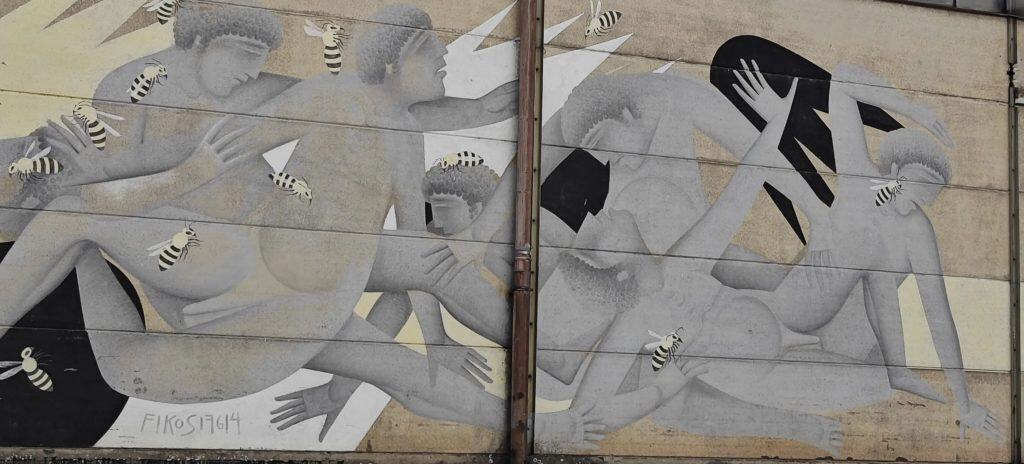
Next comes a mural by Fikos – graphic, monochrome, restrained, almost icon-like in its austerity.
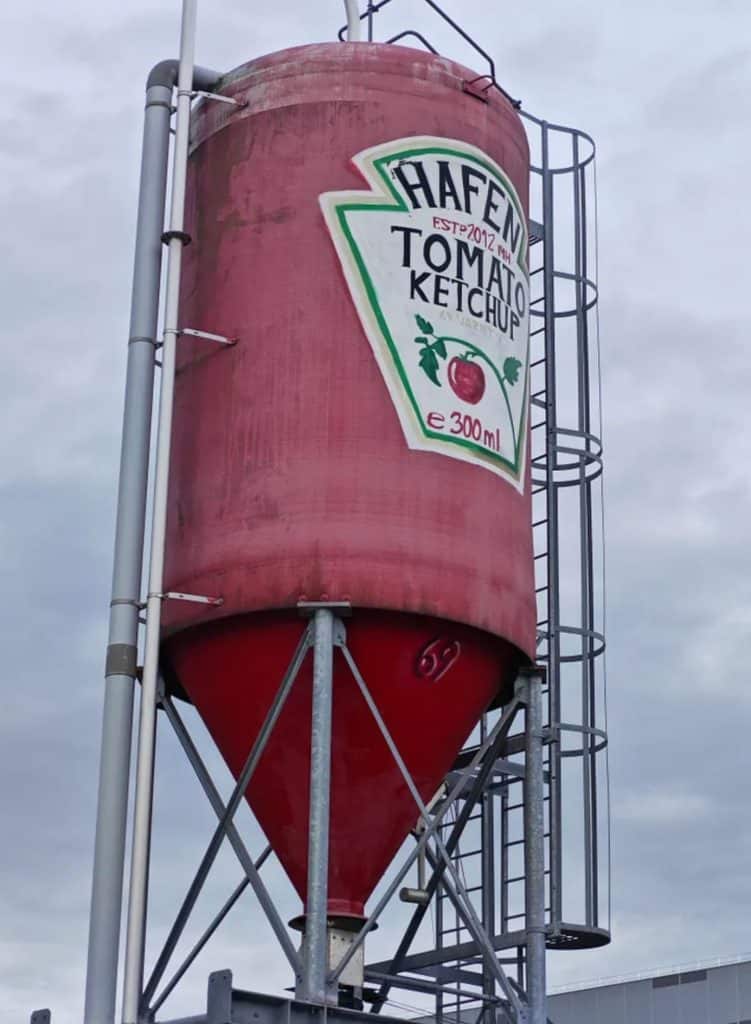
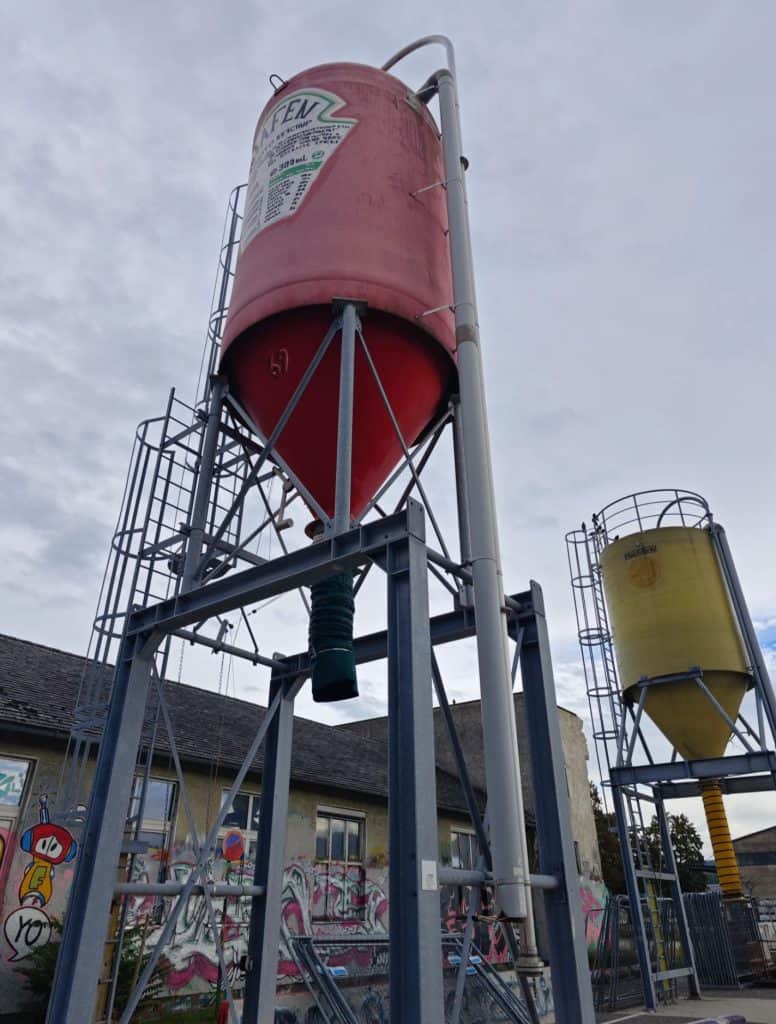
Unexpectedly, in the center of this street gallery stand two metal industrial structures designed as ketchup packaging. This is somewhat confusing, but overall it looks appropriate.
Next we are moving further through objects with murals. We meet a sloppy homage to “Brotherly Kiss” (work by Dmitry Vrubel in Berlin). Authors of this artwork are artists Martin Grubinger & Gerhard Haderer. Artist at the same time are DJs who play improvised instruments. Then follows a whole series of works, diverse in style, meaning, and visual content. It were tagging, small-scale portraits of well-known figures, huge murals, decorative paint splashes, and so on.
The Moment I Stop Looking at the Walls
Suddenly I become bored. Even the large-scale and meticulously executed murals by NYCHOS do not relieve this feeling.
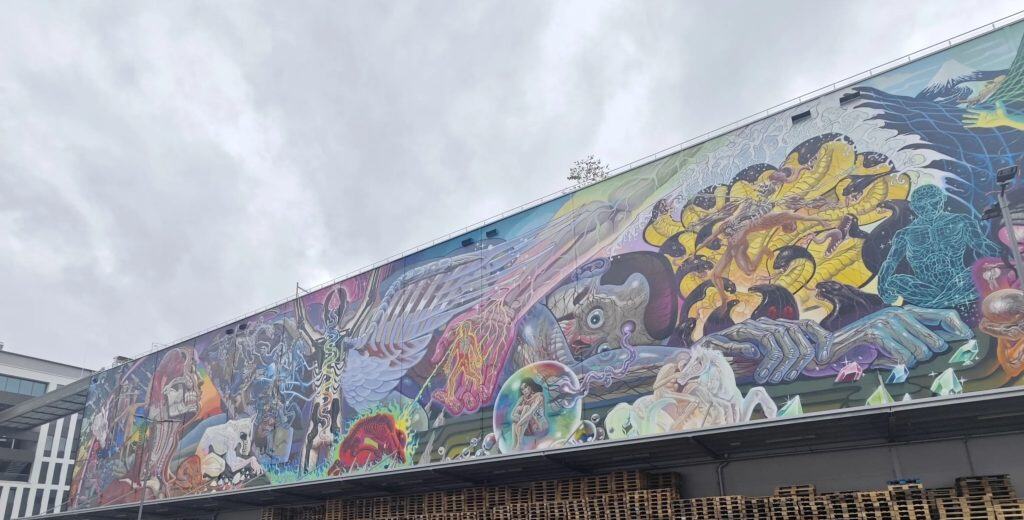
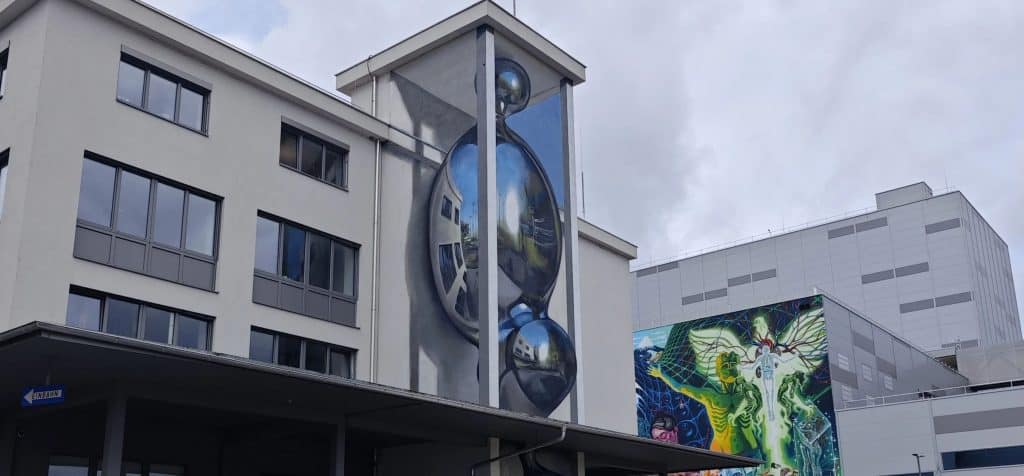
This is not the kind of boredom that comes from weak work. The works are diverse and often high-quality. This boredom comes from the absence of tension. I catch myself no longer looking at the murals, but instead looking at the surrounding environment: reflections in puddles, accidental color combinations, the rhythm of stacked pallets.
The environment begins to win over art. And the further I go, the stronger this feeling becomes.
At a certain point it becomes clear: the problem is not the works, but the conditions in which they exist. A predetermined, safe environment and curatorial selection remove from the works their spontaneity, the risk of destruction, temporality, and sharpness of statement. The conflict and tension between the works and the environment disappear. The sterility of the space turns the works, instead of sharp artistic statements typical of street art, particularly conceptual street art into gallery exhibits.
Murals are no longer street art, which in its purest form reflects something that is spontaneous, uncoordinated, and more likely to break rules than follow them.
As a conclusion
At the end of the tour, visitors got spray cans and a designated wall where they can draw or write something. Like some other visitors, I made a drawing on the wall. It was painted over the same day for the next group. And in that act, there seemed to be more of the spirit of street art – from the spontaneity and lack of coordination in its creation to its inevitable disappearance.